
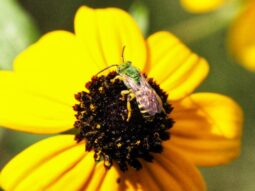
The Power of Precarity of Pollinators (start time: 8:01) This extremely warm winter in Colorado has delivered early spring blooms, and thus early appearances of some pollinators. In this week’s show we explore the world of pollinators, such as such as butterflies, bees, moths, hummingbirds and certain flies. Pollinators are responsible for roughly one third of the food we eat, and the help strengthen ecosystems. How On Earth host Susan Moran interviews Amy Yarger, senior director of Horticulture at the Butterfly Pavilion in Westminster, Colo., about the critical role these pollinators play; the various threats they face, such as the herbicide glyphosate (Roundup) and the class of insecticides called neonicotinoids; and how we can help give these important creatures a lift. Yarger leads local pollinator habitat initiatives at the Butterfly Pavilion, a nonprofit research, conservation and education institution focusing on invertebrates and their habitats.
Hosts: Susan Moran, Joel Parker
Show Producer: Susan Moran
Engineer: Joel Parker
Executive Producer: Beth Bennett
Headline Contributors: Beth Bennett, Joel Parker
Listen to the show here:

Podcast: Play in new window | Download (Duration: 26:02 — 35.8MB)
Subscribe: RSS


 New Rules of Women’s Health (start time: 6:26) If you’re female, you may have come of age reading the landmark feminist health book Our Bodies, Ourselves. Originally published in the 1970s, it yielded several revised editions up to 2011. Well, get ready for an even more comprehensive tome. It’s called



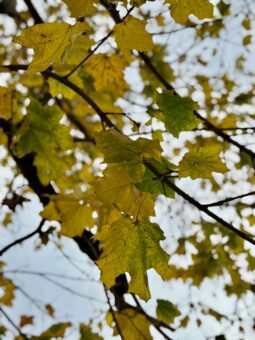 The physiology of deciduous trees (start time: 11:09) For many people living in places with four distinct seasons, such as here in Colorado, a favorite pastime at this midpoint in autumn is watching the faded leaves fall from their branches, and listening to the crackling sound while raking up the dried leaves. In this week’s How On Earth show, we explore questions like, Why do the leaves of aspen, ash and other deciduous trees “change” color in the fall? (Spoiler alert: They actually reveal their true colors.) Why do they shed their leaves every fall? And what happens to the naked trees in the winter? Host Susan Moran interviews Dr.


 Menopause & HT (start time: 0:58) It happens to every woman with a uterus who reaches midlife. Menopause is a major hormonal transition that, although very challenging for some women, is natural, and (get this!) even advantageous to civilization. Think grandmothers! Yet menopause has been largely dismissed by the medical community. As a result, too many women suffer through menopause in pain, shame, and loneliness. In this week’s show, host Susan Moran interviews