
Himalayan Glacial Lakes (starts at 5:20) Some scientists conduct their experiments in a laboratory — think clean white walls, artificial lighting, A.C. and a convenient coffee pot not far away. Not so for Ulyana Horodyskyj, a graduate student at the University of Colorado. For the last few years she’s been looking at glaciers and the lakes on top of them in Nepal. Last year she spent a year looking at how pollution affects glaciers high in the Himalayan Mountains. She hoped to set up the ultimate high-altitude laboratory on the oxygen-thin slopes of Mount Everest, but a fatal accident intervened. On this edition of How on Earth, she talks about her latest research, Himalayan glaciers and what it is like to do science at the top of the world.
Hosts: Jane Palmer, Joel Parker Producer, Engineer: Joel Parker Executive Producers: Jane Palmer, Kendra Krueger Additional Contributions: Beth Bennett, Shelley Schlender
Weather drones (start time 5:10) Brian Argrow, former professor and Associate Dean of engineering at CU Boulder, joins us in the studio to talk about the recent formation Unmanned Aircraft Systems and Sever Storm Research Group. The group is a collaboration between the CU Boulder and the University of Nebraska-LIncoln who have been working together since 2006. The group now consists of a large number of members including local national labs and university groups. The purpose of their research is to learn more about storm formation in order to improve emergency response time.
Dr. Theo Colborn (start time 15:22) Dr. Theo Colborn passed away on Sunday December 15th at the age of 87. She was a scientists, activist and founder of The Endocrine Disruption Exchange (TEDX). The exchange served to collect and disseminate scientific evidence on the effects of exposure to low-levels of industrial chemicals. During this pre-recoreded interview from our colleagues at KVNF Paonia Public Radio, she talks about the lack of scientific testing methods for fracking fluids.
Host, Producer, Engineer: Kendra Krueger Theo Colborn Interview courtesy of: KVNF Paonia Public Radio Executive Producers: Kendra Krueger, Jane Palmer
Local guides take visitors deep into the Yasuni National Park where they share knowledge about wildlife and traditional uses of native plants.
The Yasuni National Park in Ecuador is one of the most biodiverse places on earth, but it is currently at risk from oil development. Some of the park’s inhabitants, however, are trying to forge a more sustainable, and less destructive path out of poverty. These indigenous Kichwa people, who have already been caretakers of the rainforest for hundreds of years, have developed ecotourism in the region, providing all the jobs, schools and healthcare that they need. How did the community find the commitment and tenacity required for such a project? By thinking like Leafcutter ants.
To find out about the award winning model of conservation and sustainability H20 Radio’s Frani Halperin and Jamie Sudler visited the region earlier this year and produced the podcast Want to save the Amazon? Think like an Ant. We play this feature [4:15] on this week’s show and afterward [18:30] talk with Frani and Jamie about the project and what Coloradoan’s can learn from the Kichwa community’s efforts.
Hosts: Jane Palmer, Beth Bennett Producer: Jane Palmer Engineer: Maeve Conran Executive Producers: Kendra Krueger, Jane Palmer
We talk with biologist Douglas Emlen, who says that the evolution of animal weapons, in everything from dung beetles to saber tooth tigers, has him very worried about our HUMAN weapons (starts 4:20)
There’s a lot of attention right now on creating environmentally friendly technology, non-toxic and sustainable manufacturing, but as Dr. John Warner explains it, it all has to start with the chemistry.
John Warner is a chemist, professor and co-founder of the Warner-Babcock Institute for Green Chemistry. He speaks profoundly about learning methods from nature to create safer, more resilient and more elegant chemistry. John was also the recipient of this year’s Perkin Medal, one of the highest honors in the field of chemistry.
Proof: The Science of Booze (starts at 8:09): Science journalist Adam Rogers, who claims to have taken a liking to single-malt whiskey when he reached drinking age, has immersed himself further into alcohol–particularly, the history and science of making booze, tasting it, and enjoying–or suffering—the effects of it. Booze is a big story: Indeed, making it was a key piece of the dawn of human civilization, as Rogers, who is articles editor at Wired magazine, shows in his inaugural book, called Proof: The Science of Booze. Rogers talks with How On Earth host Susan Moran about fascinating fungi, sugar molecules and other key ingredients, as well as our human taste buds for alcohol. We have a couple of copies of Proof from our recent pledge drive, so call KGNU (303-449-4885) this week and pledge at least $60 to get your own copy.
Joel Parker (SwRI) is the Deputy Principal Investigator of the “Alice” ultraviolet spectrograph instrument on the Rosetta spacecraft. Photo credit: Joel Parker
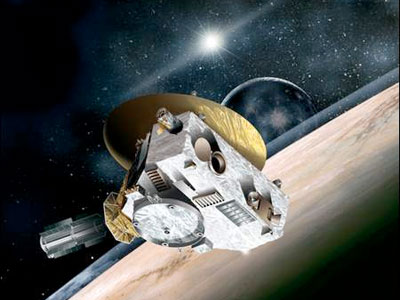
Rosetta’s Rendezvous (start time: 17:40): How On Earth’s own Joel Parker, whose “real” job as a planetary scientist is a director at the Southwest Research Institute, a collaborating partner on the Rosetta Mission. The mission last week successfully became the first to land a craft on a comet flying through our solar system. It was a well earned landing: Rosetta left earth in March of 2004 and has traveled about 3 billion miles to rendezvous with this moving target. To learn more, read this recent Q&A with Joel in the New York Times.
Also, Shelley Schlender offers a special headline (starts at 3:39), an interview with CU-Boulder’s Dr. Kenneth Wright, an integrative physiologist, about his new study offering new clues about why shift work can lead to extra weight.
Hosts: Susan Moran, Kendra Krueger Producer: Susan Moran Engineer: Kendra Krueger Additional contributors: Beth Bennett, Shelley Schlender Executive Producers: Kendra Krueger, Jane Palmer
(4:33) Think computer coding and art are worlds apart? Vikram Chandra, author of the novel Sacred Games would have you think again. In his most recent book Geek Sublime: The Beauty of Code, The Code of Beauty, Chandra looks deeply into the connections between technology and art, illustrating his arguments with a history of coding and a meditation on the writer’s craft. Under his musings is Chandra’s own story, where he finds his way to the West from India and dabbles in literature, then coding, then back to writing.
This week on How on Earth, Jane Palmer speaks with Vikram Chandra about what makes computer code beautiful, whether programming can be considered an art form and the culture that surrounds computer technology.
Hosts: Jane Palmer, Beth Bennett Producer: Jane Palmer Engineer: Kendra Krueger Executive Producers: Jane Palmer and Kendra Krueger
Gulp [starts at 4:25] Bestselling author, Mary Roach has been billed as American’s funniest science writer. In “Gulp: Adventures on the Alimentary Canal” she takes readers on a journey through the alimentary canal, extolling the marvels of spit on the beginning end, then moving on to the man who had a hole in his stomach that allowed a doctor to observe his digestion. And . . . on. Roach even interviews a prison inmate about “rectal smuggling” (including cell phones). So get ready – here’s Shelley Schlender’s conversation with Mary Roach, author of “Gulp”.
Hosts: Shelley Schlender, Beth Bennett Producer: Joel Parker Engineer: Shelley Schlender Executive Producers: Jane Palmer and Kendra Krueger
Do Fathers Matter? (start time: 3:07) If you’re a father or a son or daughter – which pretty much covers everyone – this interview should hit home. Science journalist Paul Raeburn’s latest book — “Do Fathers Matter? What Science Is Telling Us About the Parent We’ve Overlooked” – explores what seems like a no-brainer question. But the answers he discovers surprised even him. After last week’s pledge drive teaser, we now offer the extended version of host Susan Moran’s interview with Raeburn.
Joe Ryan (left) with Jack Webster. Credit: CU Boulder
Mercury in Waterways (start time: 15:20) Next time you take a sip of mountain spring water or catch a wild trout, you might be getting a bit more than you bargained for. Scientists have found mercury in Colorado waterways and in the fish that swim in them. And recent research shows that wildfires in recent years may have added to the problem. How on Earth’s Jane Palmer talked with Joe Ryan, an environmental engineering professor at the University of Colorado. Dr. Ryan also directs AirWaterGas, a project studying the impacts of oil and gas drilling on the environment.
Hosts: Ted Burnham, Susan Moran Producer: Susan Moran Engineer: Ted Burnham Executive Producers: Jane Palmer and Kendra Krueger