
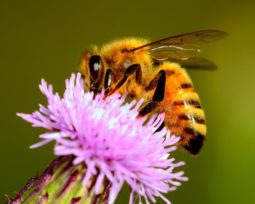
 This week on How on Earth, Beth replays in interview with Professor Mike Breed, who has been studying social insects, including ants and bees, at the University of Colorado here in Boulder, for decades. She spoke with him last year about the fascinating biology of these important pollinators, in an interview that is still timely, because the many problems facing honeybees, and other bees are continuing to mount. He describes the challenges these important insects face in the modern world, and what we can do to protect them.
Executive Producer: HOE Team
Show Producer: Beth Bennett
Additional Contributions:Benita Lee & Joel Parker
Engineer: Sam Fuqua
Listen to the show:

Podcast: Play in new window | Download (Duration: 27:24 — 21.4MB)
Subscribe: RSS



 With graduation season upon us, today’s edition of How on Earth is Part 1 of our annual “Graduation Special”. Our guests in the studio today are scientists and engineers who have or will soon receive their Ph.D. from the
 Amanda Hampton –

 In this week’s show Beth speaks with






 Today on How on Earth, Beth speaks with