
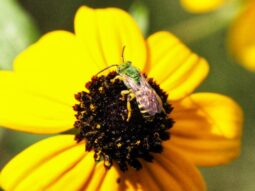
The Power of Precarity of Pollinators (start time: 8:01) This extremely warm winter in Colorado has delivered early spring blooms, and thus early appearances of some pollinators. In this week’s show we explore the world of pollinators, such as such as butterflies, bees, moths, hummingbirds and certain flies. Pollinators are responsible for roughly one third of the food we eat, and the help strengthen ecosystems. How On Earth host Susan Moran interviews Amy Yarger, senior director of Horticulture at the Butterfly Pavilion in Westminster, Colo., about the critical role these pollinators play; the various threats they face, such as the herbicide glyphosate (Roundup) and the class of insecticides called neonicotinoids; and how we can help give these important creatures a lift. Yarger leads local pollinator habitat initiatives at the Butterfly Pavilion, a nonprofit research, conservation and education institution focusing on invertebrates and their habitats.
Hosts: Susan Moran, Joel Parker
Show Producer: Susan Moran
Engineer: Joel Parker
Executive Producer: Beth Bennett
Headline Contributors: Beth Bennett, Joel Parker
Listen to the show here:

Podcast: Play in new window | Download (Duration: 26:02 — 35.8MB)
Subscribe: RSS

 Today on how on earth, Beth talks to