Colorado’s Wildlife Action Plan, etc.: Pt. II

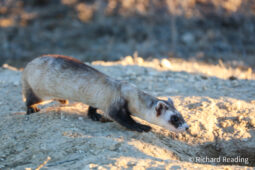
Black-footed ferret Photo credit: Richard Reading

Protecting Wolves, ferrets, prairie dogs, vultures, etc. (start time: 3:39) How effective are Colorado’s efforts to preserve vulnerable species – wolves, black-footed ferrets, bears, prairie dogs and others? And what ingredients make it possible, including throughout the U.S. and the world, for wild animals and humans to get along when their homes overlap? Today How On Earth host Susan Moran continues her conversation with our guest from last week, wildlife ecologist Dr. Richard Reading, Chair of the Colorado Parks and Wildlife Commission, about Colorado’s most recent Wildlife Action Plan, and about other efforts to protect vulnerable species, ranging from butterflies to vultures.  Dr. Reading is also  Vice President of Science and Conservation at the Butterfly Pavilion.
If you missed our Pt. I conversation with Rich Reading last week, click here.

Hosts: Susan Moran, Joel Parker
Show Producer: Susan Moran
Engineer: Joel Parker
Executive Producer: Beth Bennett

Listen to the show here:

Play

Pollinators Matter // Denver BioLabs

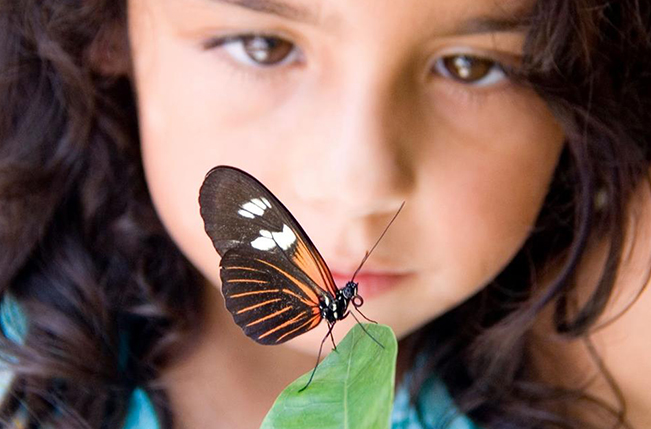
Butterfly girl
Photo credit: Butterfly Pavilion

Pollinators Matter (starts at 4:43): Now that backyard gardens are in full bloom it’s a good time to think about pollinators. Honeybees, butterflies, beetles and other pollinators depend on many flowering plants for nectar. And we depend on these pollinators for many foods we love in our diet, from almonds to apples to blueberries. Some of these pollinators, especially honeybees and monarch butterflies, are facing severe threats, here in Colorado as well as globally. Among the culprits are habitat destruction and insecticides called neonicotinoids.  The Butterfly Pavilion in Westminster is not only a popular destination for kids and adults who want to walk among butterflies, and tough tarantulas. It is also conducting research on pollinators and their habitat. Mary Ann Colley, vice president of science and conservation at the Pavilion, discusses with host Susan Moran some pollinator-focused research and educational campaigns. Info on Butterfly Pavilion’s citizen science efforts–Colorado Butterfly Monitoring Network and Urban Prairies Project–are on the Pavilion’s website. Related citizen science projects: The Bees’ Needs and Xerces Society. For more info on pollinators go to the National Wildlife Federation and USDA Agriculture Research Service.

IMG_6213
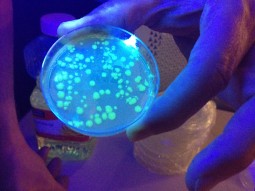
Denver Biolabs Co-founder RJ Duran shows how synthetic biology is used to make bacteria glow. Photo credit: Denver Biolabs

The New Biology (starts at 16:48): Denver Biolabs is the first community do-it-yourself bio-lab in Colorado. It focuses on making synthetic biology–where biology meets engineering–accessible to everyone. Biolabs is a community resource, giving students, researchers, entrepreneurs and others access to a community lab space. It also offers training in building bio-tools, learning lab fundamentals and experimenting with molecular gastronomy. Biolabs also develops technologies related to bioinformatics, biomimicry, bio-hacking and bio-printing. Dr. Heather Underwood is the co-founder and executive director of Denver Biolabs, which she discusses with host Leslie Dodson. For info on similar labs that have inspired Denver Biolabs, go to: Berkeley Biolabs, BioCurious, and Counter Culture Labs.

Hosts: Leslie Dodson, Susan Moran
Producer: Susan Moran
Engineer: Maeve Conran
Executive Producer: Shelley Schlender

Play