

-

- Mining retention pond in Colorado. Image courtesy of the EPA.
Clean Water Struggles. Co-host Susan Moran interviews journalist Judith Lewis Mernit about how small rural communities in the West are struggling to afford complying with federal water-quality standards as they relate to water pollutants. Mernit wrote an article on the topic in High Country News’ Dec. 12 issue. She explores the unintended consequences of complex federal standards, which place a disproportionately heavy burden on small communities. A big bone of contention, and a source of a flood of lawsuits, is a provision in the Clean Water Act that forces states to assess their impaired waterways and set maximum limits, or loads, for nitrates and other pollutants in them.
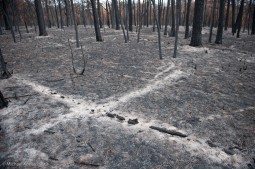
2011’s Big Sci-Enviro-Tech Stories. In the second feature co-hosts Susan Moran and Tom Yulsman are joined by How On Earth’s Tom McKinnon and Shelley Schlender, as well as photojournalist Michael Kodas (author of a forthcoming book on megafires) to reflect on 2011’s major science, technology and environment stories. The list includes extreme weather events, record-high carbon dioxide levels, the Fukushima nuclear disaster, Boulder’s November vote to consider municipalizing its electricity, and advancements in proteomics. Stay tuned for plenty more coverage of these topics on How On Earth in 2012. (Scroll down to download the audio file of the show.)
Hosts: Susan Moran, Tom Yulsman
Producer: Susan Moran
Engineers: Tom McKinnon, Shelley Schlender
Executive Producer: Tom McKinnon
Listen to the show:

Podcast: Play in new window | Download (Duration: 23:42 — 21.7MB)
Subscribe: RSS


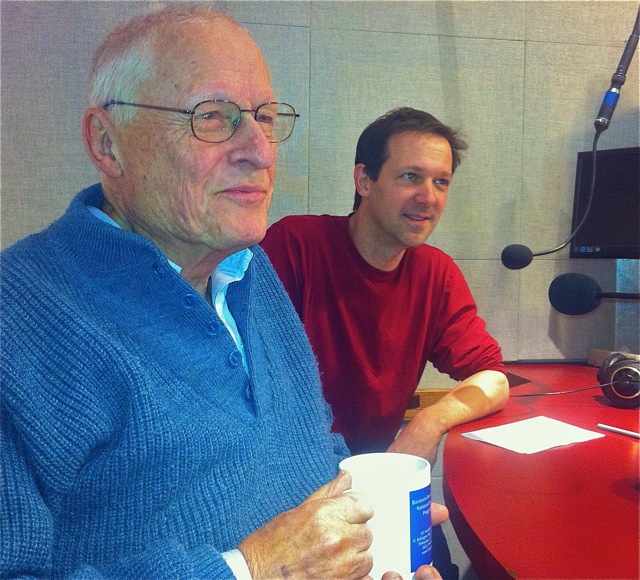


 In last month’s election, Boulder voters gave the go-ahead for the city to move forward on municipalizing the electrical utility. The chief motivation for that decision was to put more renewable energy on the grid. There are a large number of policy options to incentivize renewable energy – so many that it’s hard to keep them all straight.
  Mountainous areas like the Rockies are hotspots for plant and animal biodiversity but as the climate warms many of these species – including Colorado’s iconic pica — are under threat. Much research has focused on the effects of temperature change, but less has focused on the interactions of temperature and precipitation in a changing climate. University of Colorado biologist
 elley Schlender visited with Colorado State University Scientist and Paleolithic Lifestyle expert

 One often hears people state “I’m not good at math” or that they don’t like math because it they don’t think it has any relevance to their day-to-day life (other than, maybe, to balance a checkbook). However, both of those myths are addressed head-on in a new book titled “


 Susan Moran has a telephone interview with
  Jeff Branson of the

 Feature #1 (time mark 5:30) When people think of Colorado, they usually don’t think about “oceans”. After all, Colorado doesn’t have much of a coastline these days, though it was definitely had oceanfront property a few hundred million years ago. However, being in a landlocked state doesn’t mean that there isn’t any thing we can do to impact the health and ecology of the ocean and marine biology. Co-host Joel Parker talks with Vicki Goldstein, founder and president of the
  Feature #2 (time mark 14:10) Nitrogen – we can’t live without it, but you can have too much of a good thing. In its gaseous form nitrogen is harmless and makes up nearly 80 percent of the atmosphere. The worldwide population never would have reached 7 billion people without nitrogen, in the form of chemical fertilizer. But excess nitrogen –from fertilizer runoff, manure, human sewage and other sources is wreaking havoc on the environment. Co-host Susan Moran talks with John Mischler, a PhD student at CU Boulder, who is researching worms and snails in Colorado and Africa. He talks about how excess nutrients in ponds, lakes and elsewhere can lead to the spread of parasitic disease from trematodes to snails to us.



 Tom McKinnon and
  Shelley Schlender interviews