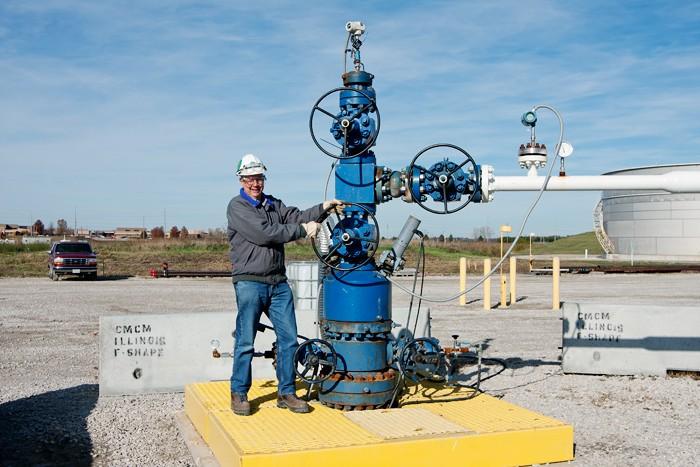

Geologic Carbon Sequestration (Start time 4:53): As carbon dioxide emissions continue to skyrocket, researchers are scrambling to find reliable ways to curb emissions of the most persistent greenhouse gas. One of the experimental approaches is geologic carbon sequestration – trapping CO2 from power plants and other sources and pumping it thousands of feet underground in rock formations. The technology looks promising, but it also had drawn controversy. One of the more unusual research projects is in Decatur, Illinois, where CO2 used in the fermentation process for producing ethanol at Archer Daniel Midland’s corn-processing plant is being injected deep into the Illinois Basin. Co-host Susan Moran talks with Dr. Robert Finley, a geologist with the Illinois State Geological Survey and principal investigator of the Decatur project.
 Colorado Clean-tech Industry (Start time 16:14): It’s not news that we are in an economic downturn. Nor is it news that the world is facing monumental environmental problems. How about a way to kill two birds with one stone? Co-host Tom McKinnon discusses how with Wayne Greenberg, director of the Fellows Institute, which is sponsored by the Colorado Cleantech Industry Association. Greenberg was the former president of E Source in Boulder, and he was the associate dean of the Tulane Law School.
Hosts: Tom McKinnon, Susan Moran
Producer: Susan Moran
Engineer: Jim Pullen
Executive Producer: Susan Moran

Podcast: Play in new window | Download (Duration: 23:15 — 21.3MB)
Subscribe: RSS


 With record high temperatures along with record low snowpack, the Colorado Front Range has been ravaged by increasingly expensive wildfires. For today’s show, How on Earth brings in two fire experts for a panel discussion.



 Engineering Happiness (start time 05:09): You may think the key to happiness lies in money, or love, or more vacation days. But what it really comes down to is math — a mathematical formula, actually. At least that’s according to a recently published book, called “