
Headlines:
- Climate Change Accelerates Changing Climate Zones – CU-Boulder and CIRES Scientist Irina Mahlstein (starts at 1:00)
- Family Dogs Harber Family Microbes – CU Boulder Scientist Rob Knight (and the American Gut Project) (starts at 2:26)
- Sound from the Big Bang – from John G. Cramer (starts at 4:45)
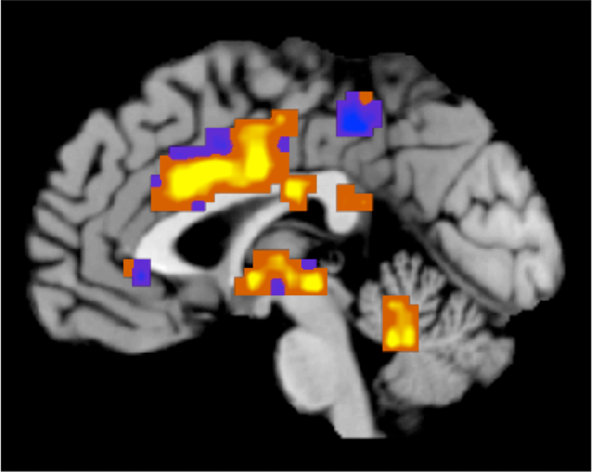
Mapping Pain in the Brain (starts at 7:30 )
If you hit your thumb with a hammer, you feel physical pain. Terrible sunburn? Pain. A muscle cramp? Pain. In each case, you know it’s pain. But how a body senses this pain has been elusive. Surgeons have tried to cut out what they think of as the brain’s pain center. This often doesn’t work, and it has side effects. Painkilling drugs? Sometimes they help, sometimes they cause addiction. Understanding the brain’s pain circuits might help scientists find better ways to deal with pain. Last week, CU-Boulder researchers took a step in that direction by publishing a magnetic resonance imaging map that they believe shows the signature of physical pain response within the brain. The lead researcher on this project is Tor Wager. Wager is the director of the Cognitive and Affective Neuroscience laboratory at the University of Colorado, Boulder.
Hosts: Joel Parker, Chip Grandits
Producer: Shelley Schlender
Engineer: Shelley Schlender
Executive Producer: Joel Parker
Listen to the show:

Podcast: Play in new window | Download (Duration: 24:35 — 22.5MB)
Subscribe: RSS



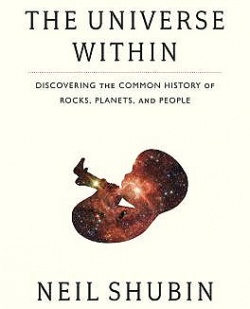
 The Universe Within (starts at 4:40) Within each and every one of us is the history of life on this planet, the planet itself and the entire universe. This is the theme of a new book “The Universe Within.” The author, Neil Shubin, is a professor of Paleontology and Evolutionary Biology at the University of Chicago. Starting with what physically constitutes a human being and what makes a human life possible, Shubin surveys many domains of science to find out what we can learn about what’s out there from what’s inside of us. It’s a fantastically broad scope, bringing together the common history of Rocks, Planets and People. As professor Shubin explains to How On Earth’s Chip Grandits, it is the very concept of this common history that binds all of these topics, which are normally found scattered throughout disparate domains of science and academia.



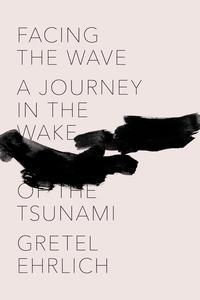
 Facing the Wave (starts at 04:50) Yesterday marked the two-year anniversary of the devastating earthquake and tsunami that rocked and partially devoured the northeastern coast of Japan. Although prone to earthquakes, the Tōhoku event hit a magnitude of 9.0, tying it for fourth largest earthquake on record according to the United States Geological Survey—a magnitude greater than scientists thought possible for this region.
 Pandora’s Lunchbox (starts at 14:38) Did you ever think how long that energy bar you ate while skiing recently would last in tact beyond the expiration date? Or that bag of Oreo cookies you devoured last night? Melanie Warner, a local journalist and former staff writer at the New York Times, started thinking about it so much that she began experimenting with leaving some processed foods out way beyond their expiration date. What she found was shocking, and led her to explore deeply into the “processed food industrial complex.” The result is a new book called “
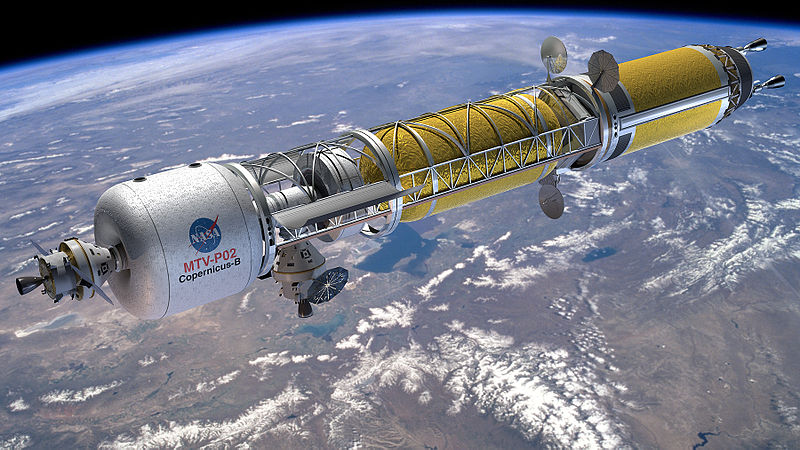

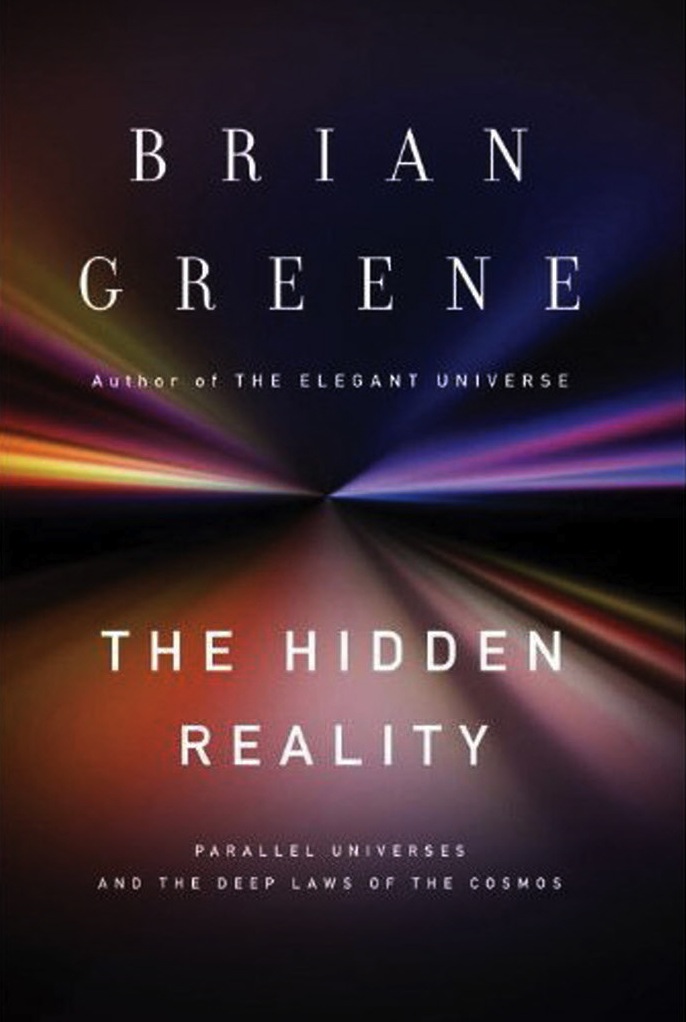
 The concept of a parallel universe, a universe remarkably like our own but with some subtle difference, has been the staple of science fiction stories for years. But it is an idea that is seriously discussed in real science starting many decades ago when physicists wrestled with the weird implications of Quantum Mechanics, and recently has appeared in many other guises in other areas of physics. One of the leading scientists in studying these ideas and explaining the mind-bending concepts to non-experts is Professor

 Russian Meteor (starts at 4:28) Just a few days ago on February 15th, a large meteor broke up in the skies over Russia, creating an air blast and sonic boom, which caused damage to buildings that injured over 1,000 people. We talk with
 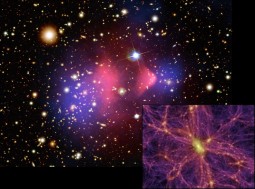 Dark Matter (starts at 12:45) Maybe you’ve heard about it. Maybe you even know that it is everywhere throughout the universe. But for such a ubiquitous material, what do you really know about Dark Matter? If the answer is “Not much,” don’t worry, you are in good company; many scientists would say the same thing. But, you’re in luck because we have