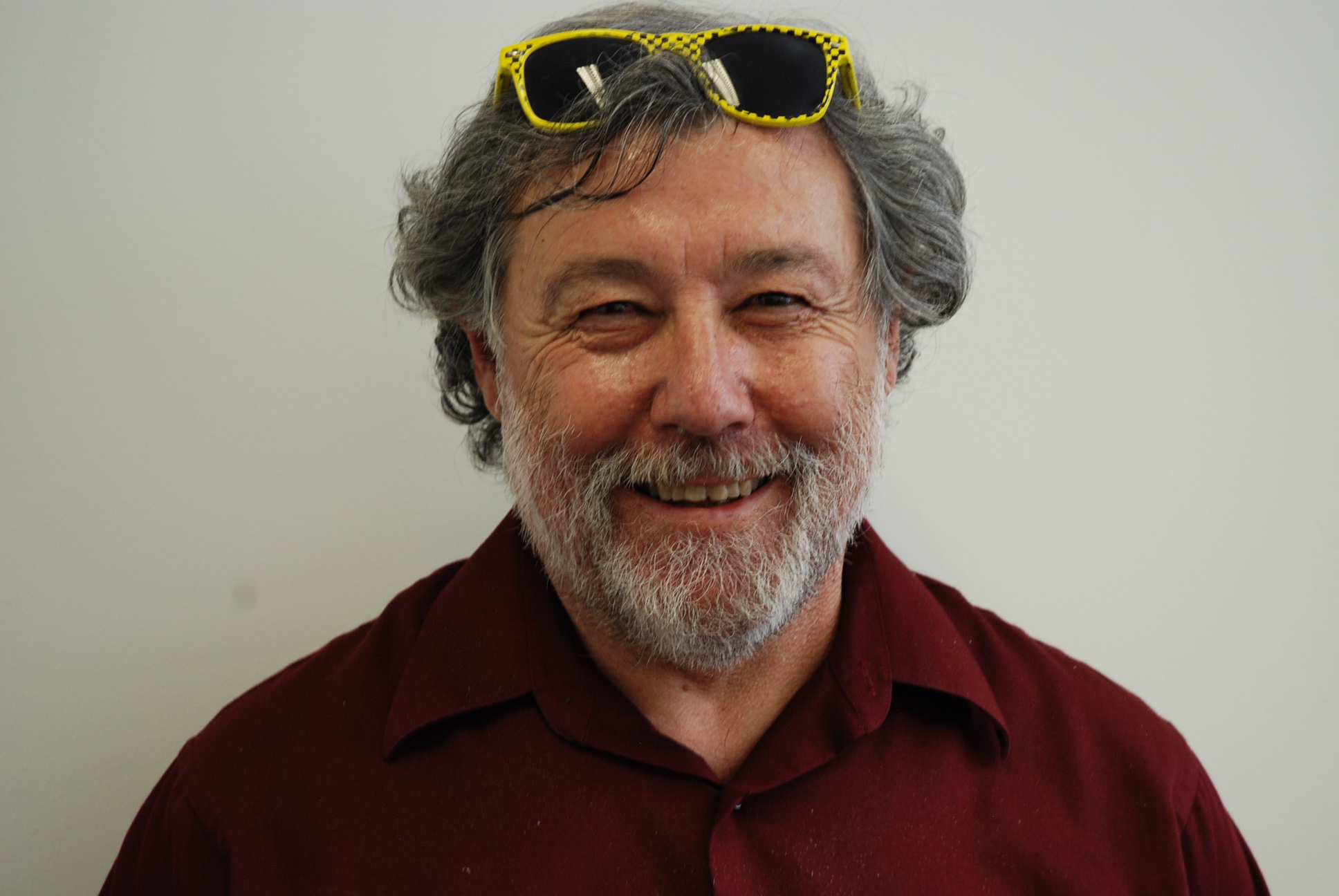
(4:33) Think computer coding and art are worlds apart? Vikram Chandra, author of the novel Sacred Games would have you think again. In his most recent book Geek Sublime: The Beauty of Code, The Code of Beauty, Chandra looks deeply into the connections between technology and art, illustrating his arguments with a history of coding and a meditation on the writer’s craft. Under his musings is Chandra’s own story, where he finds his way to the West from India and dabbles in literature, then coding, then back to writing.
This week on How on Earth, Jane Palmer speaks with Vikram Chandra about what makes computer code beautiful, whether programming can be considered an art form and the culture that surrounds computer technology.
Hosts: Jane Palmer, Beth Bennett Producer: Jane Palmer Engineer: Kendra Krueger Executive Producers: Jane Palmer and Kendra Krueger
Gulp [starts at 4:25] Bestselling author, Mary Roach has been billed as American’s funniest science writer. In “Gulp: Adventures on the Alimentary Canal” she takes readers on a journey through the alimentary canal, extolling the marvels of spit on the beginning end, then moving on to the man who had a hole in his stomach that allowed a doctor to observe his digestion. And . . . on. Roach even interviews a prison inmate about “rectal smuggling” (including cell phones). So get ready – here’s Shelley Schlender’s conversation with Mary Roach, author of “Gulp”.
Hosts: Shelley Schlender, Beth Bennett Producer: Joel Parker Engineer: Shelley Schlender Executive Producers: Jane Palmer and Kendra Krueger
Do Fathers Matter? (start time: 3:07) If you’re a father or a son or daughter – which pretty much covers everyone – this interview should hit home. Science journalist Paul Raeburn’s latest book — “Do Fathers Matter? What Science Is Telling Us About the Parent We’ve Overlooked” – explores what seems like a no-brainer question. But the answers he discovers surprised even him. After last week’s pledge drive teaser, we now offer the extended version of host Susan Moran’s interview with Raeburn.
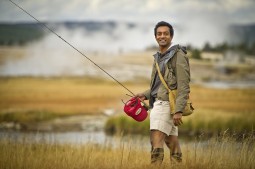
Joe Ryan (left) with Jack Webster. Credit: CU Boulder
Mercury in Waterways (start time: 15:20) Next time you take a sip of mountain spring water or catch a wild trout, you might be getting a bit more than you bargained for. Scientists have found mercury in Colorado waterways and in the fish that swim in them. And recent research shows that wildfires in recent years may have added to the problem. How on Earth’s Jane Palmer talked with Joe Ryan, an environmental engineering professor at the University of Colorado. Dr. Ryan also directs AirWaterGas, a project studying the impacts of oil and gas drilling on the environment.
Hosts: Ted Burnham, Susan Moran Producer: Susan Moran Engineer: Ted Burnham Executive Producers: Jane Palmer and Kendra Krueger
Do Fathers Matter? (start times: 9:55 and 20:58) Today’s How on Earth show is part of the KGNU fall membership pledge drive. During this show we preview an upcoming feature of the book: “Do Fathers Matter? What Science Is Telling Us About the Parent We’ve Overlooked” by science journalist Paul Raeburn. It may seem obvious that fathers matter. And of course, they do. But just how they are affected by parenthood, and how they in turn affect their kids, is not so obvious, as Raeburn shows. He looks at the latest research in anthropology, animal behavior, neuroscience and genetics to uncover many surprises.
Hosts: Joel Parker, Susan Moran, Kendra Krueger, Shelley Schlender Producer and Engineer: Joel Parker Executive Producers: Jane Palmer and Kendra Krueger
Vincent Horn and Buddhist Geeks (starts at 4:42):On October 16th the Buddhist Geek Conference comes to boulder. Founder Vincent Horn speaks to us about how mindfulness, compassion and contemplative practice can be integrated into the technical world. http://www.buddhistgeeks.com/conference/
Future Earth (starts at 12:58): On our second feature, CSU Professor Dennis Ojima talks to Susan Moran about the Future Earth Initiative. A lofty project which aims to connect scientists, policy makers and the business sector to design activities to tackle global environmental change at local and regional levels.
Hosts: Beth Bennett and Susan Moran Producer: Kendra Krueger Engineer: Maeve Conran Additional contributions: Joel Parker Executive Producers: Jane Palmer and Kendra Krueger
Living Planet Report (starts at 5:50): The environmental organization World Wildlife Fund just released its science-based biennial Living Planet Report. It doesn’t paint a rosy picture overall; WWF shows that, for instance, wildlife populations across the globe are roughly half the size they were 40 years ago. And although rich countries show a 10 percent increase in biodiversity, lower-income countries are suffering a drop of nearly 60 percent. The report also ranks the ecological footprints of 152 nations, and warns that the world is living beyond its means. But there are bright spots in the report, too. Even in the absence of national legislation and international treaties, some cities in the U.S., including Boulder, and around the world are making progress toward sustainability and greenhouse gas reductions. Co-host Susan Moran interviews Keya Chatterjee, director of WWF’s renewable energy and footprint outreach program.
Finding Exoplanet Water (starts at 18:15): For the first time, scientists have detected water vapor on a cold exoplanet the size of Neptune. Previously, it had only been possible to measure the atmospheres of larger, Jupiter-sized exoplanets, but these findings from the Hubble and Spitzer Telescopes bring scientists a significant step closer to studying the atmosphere of Earth-sized planets orbiting other stars. Understanding the atmosphere of exoplanets may tell us more about their evolution and formation – Eliza Kempton, assistant professor of physics at Grinnell College in Iowa, explains in this report from Roland Pease of the BBC’s Science In Action.
Executive Producer: Joel Parker Producer: Ted Burnham Co-Hosts: Susan Moran, Ted Burnham Engineer: Ted Burnham Headlines: Beth Bennett, Jane Palmer
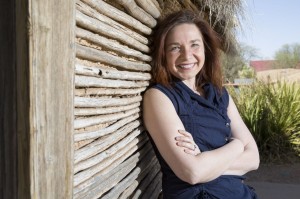
Facts and Faith (starts at 4:30): Two weeks ago Dr. Katharine Hayhoe, a professor of atmospheric science at Texas tech came to town to speak at Chautauqua. As a scientist and a Christian, she advocates for illuminating the urgency and reality of climate change to conservative and religious audiences. We had the opportunity to sit down and talk about the interconnection of faith and science and why so much tension exists between these two communities.
Mark Williams, co-founder and director of the Colorado Water and Energy Research Center
Testing the Water (Start time 3:30) What exactly is in our water—the stuff we drink, shower in and use to wash our vegetables? This is a question lots of Coloradans have started to ask in the last few years as oil and gas operations have ramped up in the state. Several communities have become very concerned how nearby drilling operations might be adversely affecting the quality of their water supply. We’ve seen the videos of people living near to fracking wells lighting their tap water, and we’ve heard the stories about the possible health impacts but how much of this is anti-fracking dramatization and how much is there really to be concerned about? How much is energy development in Colorado affecting the water supply and how can we, that is Jane and Joe public, find out the vital statistics of our water quality?
Co-host Jane Palmer discusses these questions with hydrologist Mark Williams from the University of Colorado. Williams is the co-founder of the Colorado Water and Energy Research Center (CWERC) and he has conducted projects around the state looking at the impacts of energy operations on both water and air quality. He has also developed a guide to help residents who live near oil and gas development test their water. The “how to” guide shows well owners how energy-related or other activities might affect their groundwater.
Executive Producer: Joel Parker Producer: Jane Palmer Co-hosts: Jane Palmer, Ted Burnham Engineer: Ted Burnham Additional Contributions: Shelley Schlender
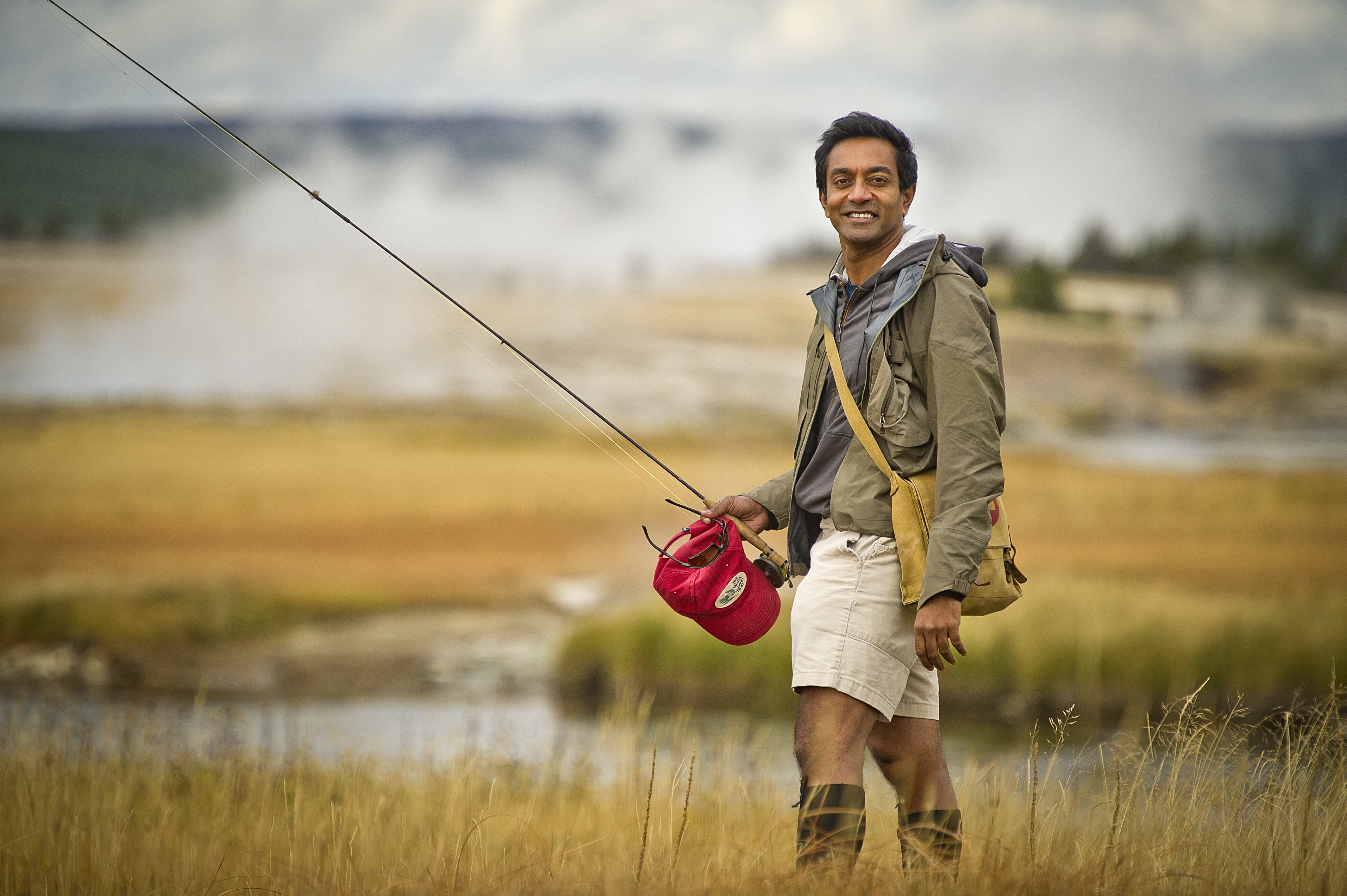
The Meaning of Wilderness (starts 4:30):Fifty years ago last week, President Lyndon Johnson signed into law the Wilderness Act. It was then, and remains today, one of the most significant pieces of environmental legislation. It has protected millions of acres of land. And it established a legal definition of wilderness: “an area where the earth and its community of life are untrammeled by man, where man himself is a visitor who does not remain.” Today, many are questioning what conversation should look like hardly a square inch of land around the world is truly “untrammeled.” Co-host Susan Moran discusses wilderness then and now with Dr. M. Sanjayan, a senior scientist at Conservation International. He was a correspondent on the Showtime series on climate change, called Years of Living Dangerously. His next TV series, which will air next February, is called Earth — A New Wild. Dr. Sanjayan will speak this Friday at 4 pm MT at Americas Latino Eco Festival. (www.americaslatinoecofestival.org)
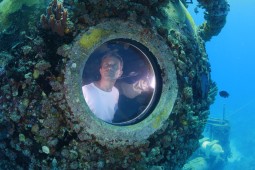
Fabien Cousteau in the Aquarius underwater lab. Photo courtesy Kip Evans.
Living Underwater (starts 13:50):This segment continues our series, “The Ocean is Us,” exploring how we all, even in land-locked Colorado, are connected to the ocean, and what’s at stake. Co-host Susan Moran interviews Fabien Cousteau, grandson of Jacques-Yves Cousteau, the late oceanographic explorer who opened a window into the ocean for millions of people worldwide in the 1960s through his revolutionary scuba diving and underwater-living adventures. Fabien, an aquanaut, oceanographic explorer, and documentary filmmaker, discusses Mission 31, his recent 31-day underwater-living experiment (one day longer than Jacques-Yves’ expedition a half century ago).
All features in the “The Ocean Is Us” series can be found here. Also, checkout KGNU’s year-long series on Colorado water issues. It’s called Connecting the Drops. It’s at kgnu.org and yourwatercolorado.org. To learn more or become active in preserving our watershed and the oceans, go to Colorado Ocean Coalition.
Executive Producer: Joel Parker Producer: Ted Burnham Co-hosts: Susan Moran, Ted Burnham Engineer: Ted Burnham Additional Contributions: Jane Palmer, Beth Bennett

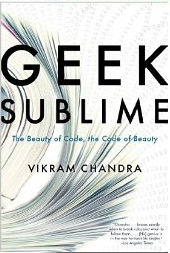
 (4:33) Think computer coding and art are worlds apart? Vikram Chandra, author of the novel Sacred Games would have you think again. In his most recent book Geek Sublime: The Beauty of Code, The Code of Beauty, Chandra looks deeply into the connections between technology and art, illustrating his arguments with a history of coding and a meditation on the writer’s craft. Under his musings is Chandra’s own story, where he finds his way to the West from India and dabbles in literature, then coding, then back to writing.


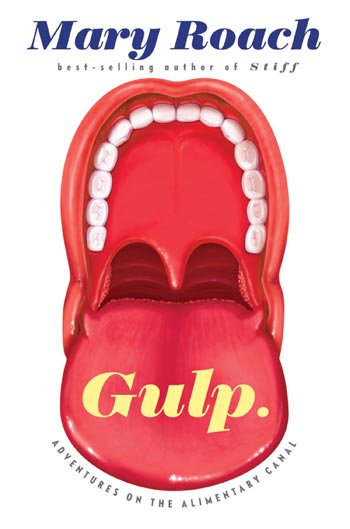
 Gulp [starts at 4:25] Bestselling author,
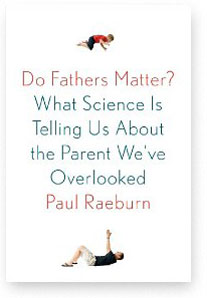
 Do Fathers Matter? (start time: 3:07) If you’re a father or a son or daughter – which pretty much covers everyone – this interview should hit home. Science journalist Paul Raeburn’s latest book — “Do Fathers Matter? What Science Is Telling Us About the Parent We’ve Overlooked” – explores what seems like a no-brainer question. But the answers he discovers surprised even him. After last week’s pledge drive teaser, we now offer the extended version of host Susan Moran’s interview with Raeburn.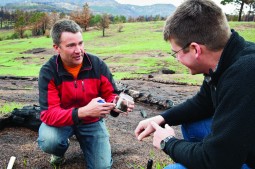


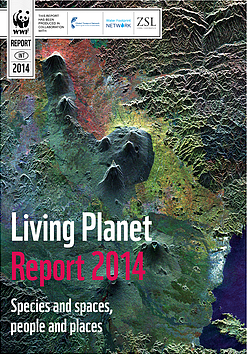
 Living Planet Report (starts at 5:50): The environmental organization World Wildlife Fund just released its science-based biennial