
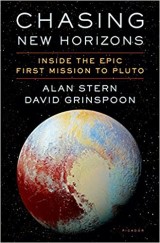
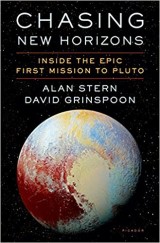
 In 2015, the New Horizons Spacecraft flew past Pluto. Because Pluto is so far away, it took nearly 10 years of travel for the spacecraft to reach that distant dwarf planet — and that was after a decade of work to get the spacecraft to the launch pad. Planetary scientists Alan Stern and David Grinspoon have written a new book, called: “Chasing New Horizons: Inside the Epic First Mission to Pluto”. The book tells the story of developing and operating the New Horizon mission.
How on Earth’s own Joel Parker is also a scientist on the New Horizons mission, and he had a chance to chat with Alan and David about their book. Last week we heard the first part of this interview. In today’s show, we present Part 2 of that interview. You can also listen to the full extended interview.
Host/Producer: Alejandro Soto
Engineer: Chip Grandits
Add’l Contributions/Executive Producer: Joel Parker

Podcast: Play in new window | Download (Duration: 28:38 — 26.2MB)
Subscribe: RSS




 With graduation season is upon us, today’s edition of How on Earth is the second of a two-part annual “Graduation Special”. Our guests in the studio today are scientists who will receive their Ph.D. in a STEM-related field. They talk about their thesis research, their grad school experiences, and what they have planned next.
 HyunJoo Oh – CU Boulder,
  Nathan Parrish – CU Boulder,
  Diana Perry – Stockholm University,
 Oliver Paine
 Diba Mani
 John Nardini

 Attention all Nature Lovers and Amateur Naturalists, Friday April 27th kicks of the

 New Theory of How Cancer Evolves Inside Us (start time: 0:58): It is commonly known that cancer afflicts old people more than youth. Conventional wisdom has held we get cancer with age largely because we accumulate lots of genetic mutations over many years, and it’s the mutations that cause cancer. Our guest,








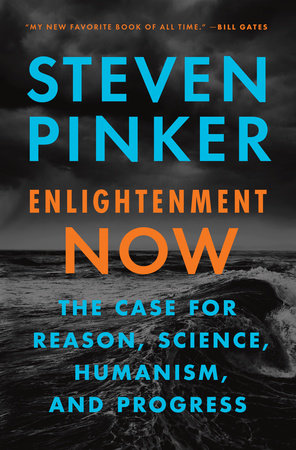
 You may be among many who wistfully harken back to the “golden days” of the past. For some people the past does look rosier, or perhaps the present looks grim, but, according to