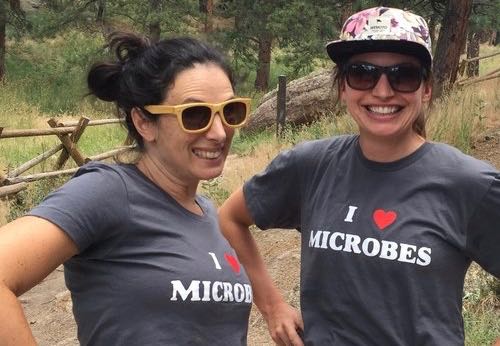
On the first day of the summer pledge drive, Beth interviews Dr Brittany Demmitt, a behavioral molecular geneticist. Her recent study used a powerful genetic tool, identical twins, to show that the micro biome in the mouth is influenced by both genes and environment.
This August 21st, some parts of the Earth will be plunged into darkness in the middle of the day. It will be a solar eclipse; the moon’s shadow will cross the United States from Oregon to South Carolina, with the path closest to Colorado passing through Wyoming and Nebraska.
There have been many eclipses across the US, but there was a particularly special one nearly 140 years ago on July 29th, 1878. That eclipse came at a time in American history of western expansion, industrial growth, new inventions and World’s Fairs, and a young country wanting to establish itself on the international stage of science and technology.
We offer two feature interviews on today’s show. Chronic Fatigue Syndrome (start time: 11:49) Imagine spending years waking up so sore and fatigued many mornings that you can barely move. And traversing the country to find doctors who could offer a clear diagnosis, only to find out they don’t really know. And feeling your friendships and professional relationships start to fray, as people question whether you’re making up your illness. For those who have suffered from chronic fatigue syndrome (CFS, or ME), or a similar disease, Julie Rehmeyer’s story may sound painfully familiar. The science and math writer talks with host Susan Moran about her new book about the illness, called Through the Shadowlands: A Science Writer’s Odyssey Into an Illness Science Doesn’t Understand. Rehmeyer will speak about her book on Thursday at 7:30 p.m. at the Boulder Book Store.
Nevada Solar One plant, Photo credit: Tom McKinnon
Renewable Energy Debate (start time: 3:20): A bitter scientific debate, as reported in the Washington Post, has surfaced among two scientific groups that are both pushing to decarbonize U.S. electricity generation. On one side are experts such as Boulder mathematician Christopher Clack, who contends in a new analysis that the U.S. can cut its carbon emissions by nearly 80%, using existing technologies, by 2030. On the other side of this feud is Mark Jacobson, an atmospheric scientist and engineer at Stanford University. He claims the nation can move to 100% renewable energy by 2055. This week, in a peer-reviewed analysis published in the Proceedings of the National Academies of Sciences, Clack and colleagues call Jacobson’s vision of 100% renewables unrealistic, and says his calculations and modeling are full of errors. Jacobson and his group have countered Clack et al’s analysis is full of errors. Dr. Clack, founder of Vibrant Clean Energy and with NOAA and the University of Colorado Boulder when he conducted this research, talks with host Shelley Schlender about the science, the debate, and what it means for the pursuit of clean energy.
Hosts: Susan Moran, Shelley Schlender Producer: Susan Moran Engineers: Maeve Conran, Shelley Schlender Executive Producer: Susan Moran
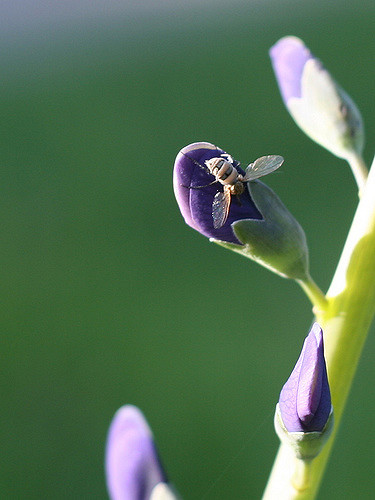
We offer two features on today’s show: Protecting Pollinators (start time: 0:58): Hills, prairies and gardens are neon green and in full bloom. A pollinator’s paradise, at least it should be. Birds, bees, butterflies, beetles and other pollinators rely on the nectar from flowering plants. We humans rely on them; roughly one out of every three bites we take comes from food that would not exist if not for pollinators. National Pollinator Week is June 19 – 25. It will celebrate pollinators and promote how humans can help protect them. Vicki Wojcik, research director at Pollinator Partnership, an organization that focuses on conservation, scientific research and education aimed at preserving pollinators, talks with host Susan Moran. Resources: Bee Safe Boulder (People and Pollinators Action Network), Colorado State Beekeeper Association, and Butterfly Pavilion.
Testing Drinking Water (start time: 14:00): Two years ago Flint, Mich., turned the issue of lead in drinking water from a little known, or distant-past, hazard into a national scandal. Human error and coverups resulted in many Flint homes showing staggeringly high levels of lead in their drinking water. What happened in Flint has afflicted other cities. Water districts, which are required to monitor a sampling of homes in their districts for lead in drinking water, are stepping up efforts to prevent more Flints from happening. Here in Colorado, water districts use soda ash and other chemicals to keep their water from being overly corrosive, which was the problem in Flint. How On Earth’s Shelley Schlender interviews Michael Cook, district manager of the Little Thompson Water District at the Carter Lake Water Filtration Plant near Loveland. The plant was recently out of compliance, meaning that samples from water district have shown higher levels of lead than what the state health department considers safe. Cook discusses what the district has done. (Boulder has its own water-filtration plant and has not been out of compliance at least in recent years. But all water districts must address similar concerns.)
Hosts: Maeve Conran, Susan Moran Producer: Susan Moran Engineer: Maeve Conran Executive Producer: Susan Moran
With graduation season is upon us, or in many cases in the rearview mirror, today’s edition of How on Earth is the second of a two-part “Graduation Special”. Our guests in the studio today are scientists who recently graduated with – or soon will receive – their Ph.D. They talk about their thesis research, their grad school experiences, and what they have planned next.
Abby Koss – CU Boulder, Chemistry and Biochemistry Topic: New Insights into Fossil Fuel Volatile Organic Compound Emissions and Chemistry using H3O+ and NO+ Chemical Ionization Mass Spectrometry
With graduation season is upon us, or in many cases in the rearview mirror, today’s edition of How on Earth is the first of a two-part “Graduation Special”. Our guests in the studio today are scientists who recently graduated with – or soon will receive – their Ph.D. They talk about their thesis research, their grad school experiences, and what they have planned next.
David Horvath – Colorado School of Mines, Department of Geophysics
Topic: Planetary Hydrology: Implications for the Past Martian Climate and Present Titan Lake Hydrology Using Numerical Models of the Hydrologic Cycles on Titan and Mars
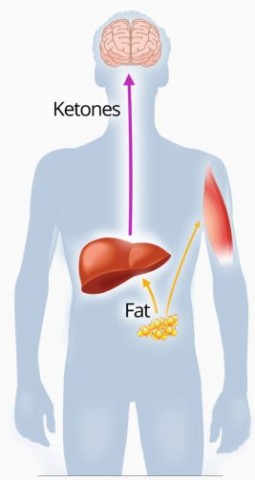
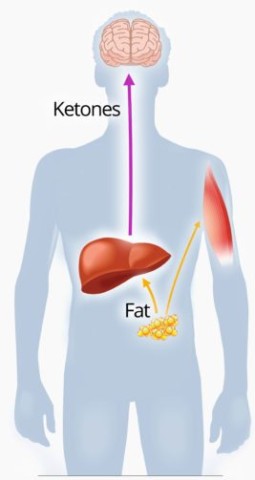
In their upcoming book, A Metabolic Approach to Cancer, authors Dr Nasha Winters and Jess Kelley, describe new developments in individualized therapies for cancer, based on nutrition and personalized genetic analysis. Almost 100 years ago it was found that cancer cells rely almost exclusively on burning glucose for their growth. In the last 10 years, it was found that limiting glucose (and other carbs) in the diet can curb the growth of cancer and mitigate some of the problems associated with conventional therapies like chemo. The authors expand on this theme and also apply an encyclopedic wealth of nutritional data and research to various physiological systems that can prevent or reduce cancer’s impact.
Hosts: Beth Bennett and Susan Moran Producer: Beth Bennett Engineer: Maeve Conran Additional Contributions: Joel Parker Executive Producer: Susan Moran
Gold Lab Symposium (starts 1:00) Scientist and Entrepreneur Larry Gold shares what to expect in science and health at the annual Gold Lab Symposium, taking place this weekend at CU Boulder. This year’s theme is “From Lab to Living Room.” Go to the Gold Lab Symposium website to register for the conference and to hear recordings of the talks afterward.
Marc Bekoff – The Animals’ Agenda (starts 12:00) – Ecologist and philosopher Marc Bekoff talks about his new book, co-authored with bioethicist Jessica Pierce, titled, The Animals’ Agenda – Freedom, Compassion, and Coexistence in the Human Age.
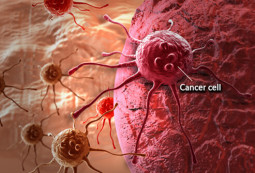
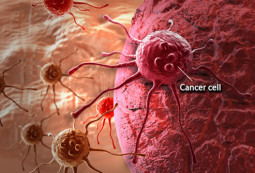
A cancer cell in the breastThis week on How on Earth Beth interviews Travis Christofferson, author of Tripping over the Truth, in which he explores the history, and the human story that has led to the resurgence of Otto Warburg’s original metabolic theory first proposed in 1924. Despite incredible biomedical advances, the death rate today is the same as it was in 1950. The metabolic theory offers an answer and alternative therapies. Find out more about Christofferson’s book at http://www.chelseagreen.com/tripping-over-the-truth
Hosts: Beth Bennett and Joel Parker Producer: Beth Bennett Engineer: Joel Parker Additional Contributions: Joel Parker Executive Producer: Susan Moran
500 Women Scientists (starts 3:01) Ecologist Jane Zelikova explains how an acquaintance while at CU-Boulder led to an open letter she co-authored with Kelly Ramirez about science . . . and this ultimately launched an advocacy group. Over 19,000 women scientists have joined 500 Women Scientists. They have on line and also local community face-to-face discussions, and they plan to be part of Earth Day’s March for Science.
Tracking Methane Leaks with Google Street View Cars (starts 10:00) Colorado State University biologist Joe Von Fischer is on a mission to reduce pollution from leaking natural gas lines and their potent greenhouse gas, methane. Partnering with the non-profit Environmental Defense Fund and Google Earth Outreach, his team uses Google Street View cars for a first-of-its-kind, comprehensive inventory of urban methane leaks to display on Methane Leak Maps. A New Jersey utility plans nearly $1 billion of leaky gas line upgrades guided in part by this CSU data.






 This August 21st, some parts of the Earth will be plunged into darkness in the middle of the day. It will be a solar eclipse; the moon’s shadow will cross the United States from Oregon to South Carolina, with the path closest to Colorado passing through Wyoming and Nebraska.

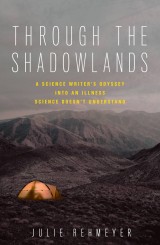 We offer two feature interviews on today’s show.

 Testing Drinking Water (start time: 14:00): Two years ago Flint, Mich., turned the issue of lead in

 With graduation season is upon us, or in many cases in the rearview mirror, today’s edition of How on Earth is the second of a two-part “Graduation Special”. Our guests in the studio today are scientists who recently graduated with – or soon will receive – their Ph.D. They talk about their thesis research, their grad school experiences, and what they have planned next.
 Abby Koss
 Matteo Crismani

 Morgan Rehnberg – CU Boulder,
  David Horvath – Colorado School of Mines,
  Joseph Lee – CU Boulder,
 In their upcoming book,