

For our annual Spring Pledge Drive, we feature a book about race, religion and DNA. The book is The Wandering Gene and the Indian Princess, by Jeff Wheelwright. It’s a story about a beautiful young, Hispano woman in the San Luis Valley of Colorado who one day finds a pea-sized lump in her breast. Her name is Shonnie Medina. She is both Spanish and Native American – and the Spanish side of her family has been in the San Luis Valley for many centuries, farming, ranching, for the most part devout Catholics, often proud of their Catholic Spanish heritage. We learn that Shonnie is a carrier of a potentially deadly condition, because her DNA includes “the breast cancer gene” that increases the risk of breast cancer, in some cases, by 80%, while also increasing the risk of other cancers, including some in men. It’s a mutation that is over a thousand years old, and surprisingly, the version of this mutation that Shonnie carries is sometimes known as a “Jewish” cancer. For more, here’s Shelley talking with The Wandering Gene’s author, Jeff Wheelwright.
Hosts: Susan Moran, Joel Parker
Producer: Shelley Schlender
Engineer: Shelley Schlender
Contributor: Jim Pullen
Executive Producer: Shelley Schlender
Listen to the show:

Podcast: Play in new window | Download (Duration: 26:54 — 24.6MB)
Subscribe: RSS
















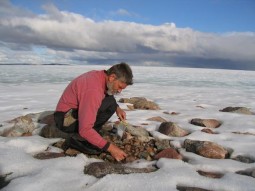


 Underwater Volcanoes (start time 5:45). Most of our planet’s volcanoes are out of sight, and largely out of mind. Hidden under sometimes thousands of feet of water, volcanoes on the sea floor bubble and boil away without our knowledge and largely without our understanding. We talk with Oregon State University volcanologist
  Sleep (start time 15:50). As any mother knows, when children get cranky, one of the best solutions is to “go take a nap.” What is less understood is whether or not those naps can be now and then, or whether it’s important to keep them regular. We speak with an expert who has just published a study that looks at the question of napping among preschool children. Her name is




 nicotine patches really help you stop smoking? Shelley Schlender interviews a scientist who says they don’t.