
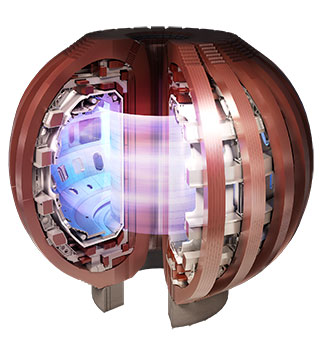
Amid all the hypes, hopes, and concerns about artificial intelligence, it has been successfully applied to many areas of math and science with many more ideas on how it can improve future research. Our guest today discusses one such topic: how AI can be applied to improve research into plasmas and fusion energy. Our guest in this episode is Dr. David Bortz, professor of Applied Mathematics at the University of Colorado, Boulder. Earlier this year, Dr. Bortz was awarded a grant from the Department of Energy’s Genesis Mission program, an initiative to apply artificial intelligence to areas of scientific research including energy technology. Dr. Bortz’s project focuses on improving the prospects of fusion energy.
Executive Producer: Susan Moran
Show Producer & Engineer: Joel Parker
Headlines: Beth Bennett, Shelley Schlender
Listen to the show:

Podcast: Play in new window | Download (Duration: 25:59 — 23.8MB)
Subscribe: RSS

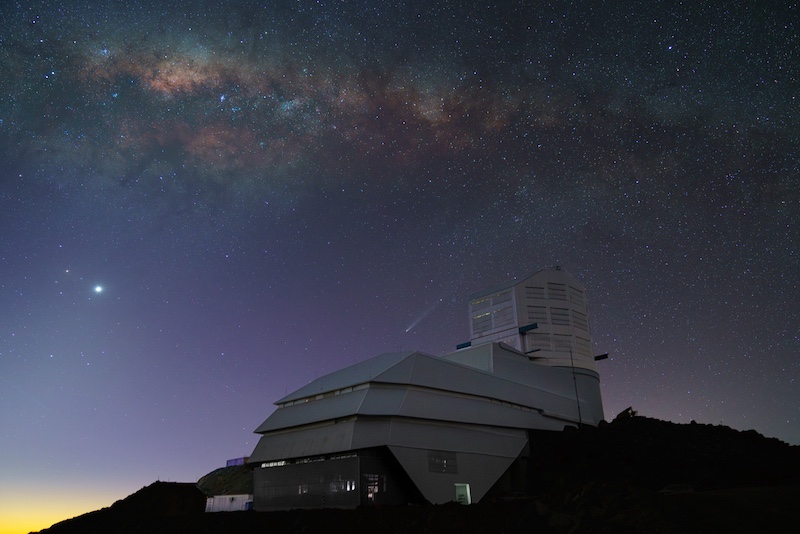 The history of astronomy has many stories of trying to understand our universe, and those stories are connected by a common thread: looking at the sky, whether with our eyes or with increasingly powerful telescopes. The newest entry in this telescopic journey is the
